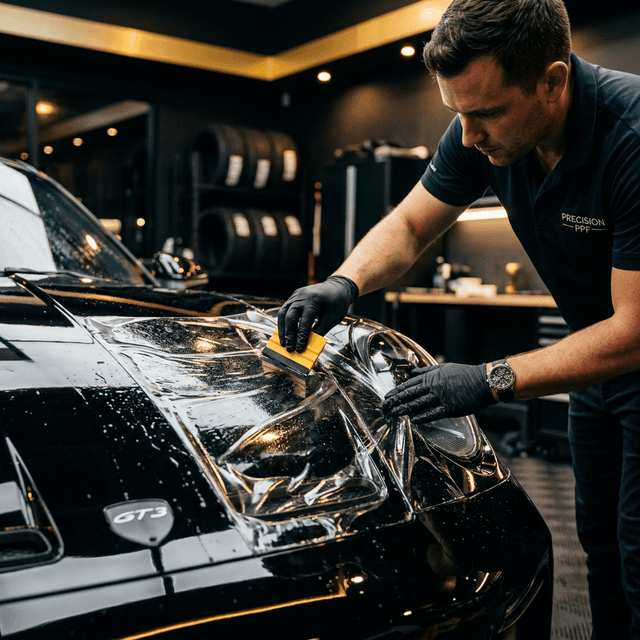
The paint protection film market is flooded with products of varying chemical compositions, creating massive consumer confusion. To make an informed decision, it's essential to understand the material science behind each roll of film.
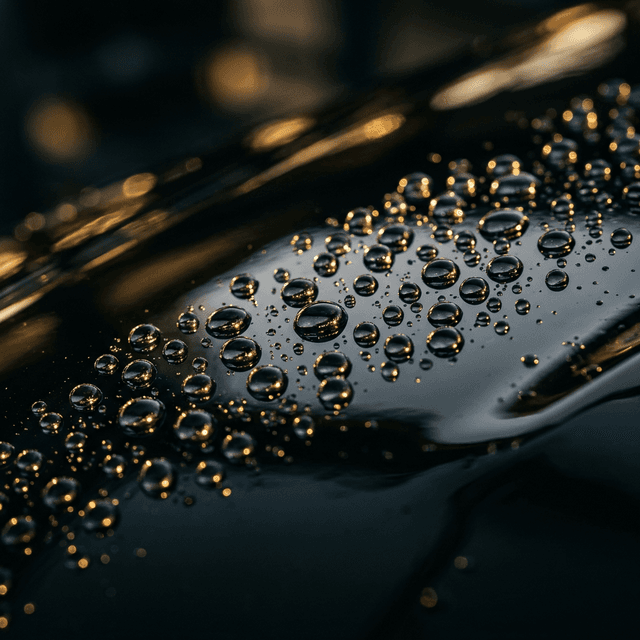
TPU (Thermoplastic Polyurethane) is the undisputed gold standard of the industry in 2026. It's the polymer used by global leaders. Its superiority rests on three fundamental properties: exceptional optical clarity that doesn't yellow under prolonged UV exposure, structural flexibility allowing it to conform to the most complex body curves, and above all, thermal shape memory — the famous self-healing property. When a micro-scratch appears on a TPU film, applying heat (sunlight, warm water) allows the polymer chains to return to their original configuration, literally erasing the damage.
TPH (Thermoplastic Polyurethane Hybrid) is an intermediate alternative. Less costly than pure TPU, TPH offers decent clarity and some flexibility, but its self-healing properties are significantly inferior. Recovery is slower, less complete, and deeper scratches persist. For a vehicle worth over $50,000, the compromise isn't justified.
PVC (Polyvinyl Chloride), still present on the market via cheap products, is the riskiest choice. PVC undergoes rapid photochemical degradation under UV exposure: unsightly yellowing within the first 12-18 months, progressive cracking, and eventually catastrophic delamination. Worse still, removing degraded PVC can tear fragments of factory clear coat, causing exactly the damage the owner was trying to prevent. Horizontal surfaces — hoods and roofs — are most vulnerable to this degradation.
Thickness is another critical factor. Premium PPF films measure between 150 and 200 microns (6 to 8 mil). This thickness is calibrated to absorb the kinetic energy of a gravel impact while maintaining transparency and conformability. Cheap films, often limited to 100-120 microns, provide only a fraction of this ballistic protection.
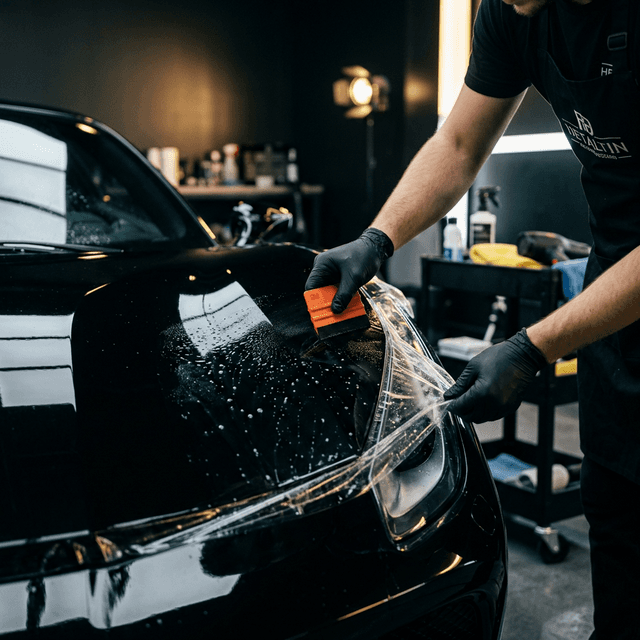
At Athena PPF, we exclusively use superior-grade TPU films. Each roll is inspected before installation to verify optical clarity, pressure-sensitive acrylic adhesive uniformity, and self-healing top coat integrity. This rigor guarantees 10 years of uncompromised protection.
In summary: if you're protecting a vehicle you treasure, TPU is the only rational choice. The additional cost over TPH or PVC is recouped within the first year through preserved gloss, zero yellowing, and self-healing properties that maintain the aesthetic integrity of your investment.