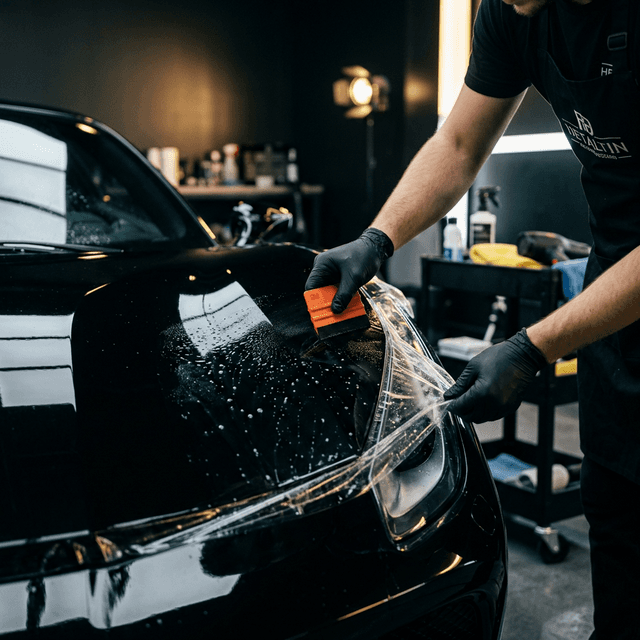
The question comes up constantly: "Do I need PPF or ceramic?" The short answer: ideally both, but for fundamentally different reasons. Understanding this distinction is the key to a wise investment in your vehicle's preservation.
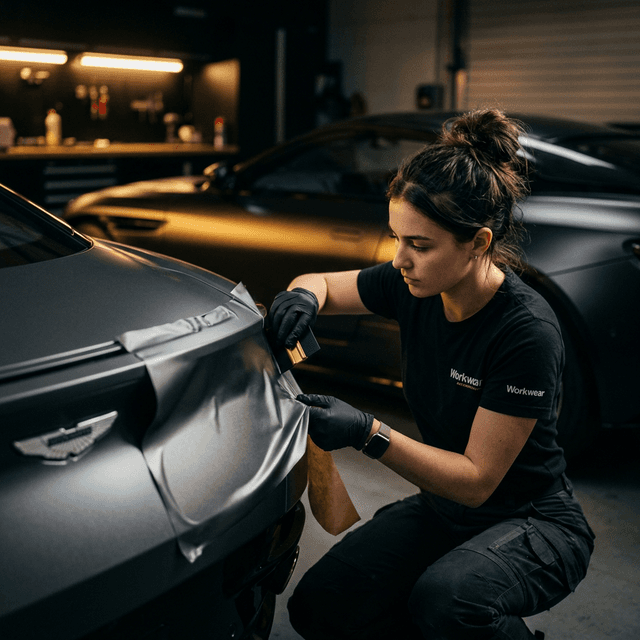
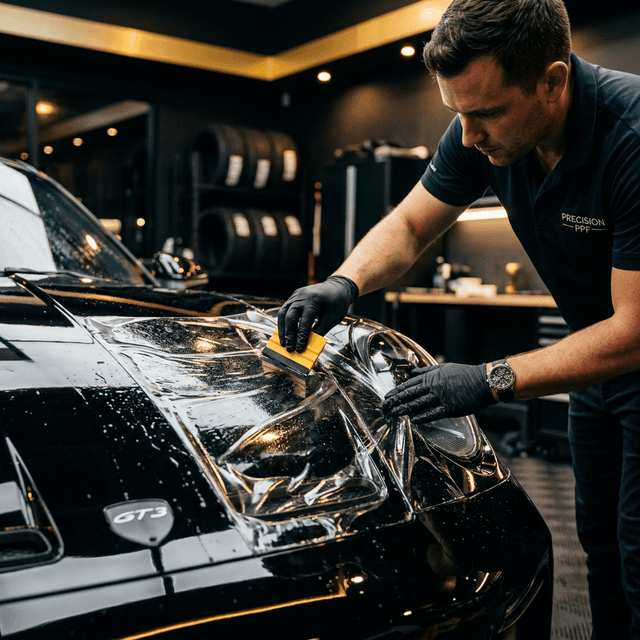
PPF (Paint Protection Film) is physical protection — a sacrificial armor. It's a clear thermoplastic polyurethane (TPU) film, 150 to 200 microns thick, that literally absorbs high-speed gravel impacts, resists micro-scratches, and has heat-activated self-healing properties. It's your shield against mechanical road aggression: rock chips, sand thrown by trucks, and even accidental key or zipper pressure.
Ceramic coating, on the other hand, is chemical protection. It's a nano-molecular coating that creates an extreme hydrophobic barrier, makes washing easier, and protects against UV and chemical contaminants (bird droppings, tree sap, road salt). By bonding to the clear coat at a molecular level, it creates a water contact angle exceeding 110°, literally making droplets bounce off the bodywork.
The most dangerous myth in the industry is believing that ceramic coating protects against rock impacts. It doesn't. No chemical coating, regardless of hardness (9H, 10H), can absorb the kinetic energy of a gravel projectile launched at 120 km/h. Only PPF offers this ballistic protection.
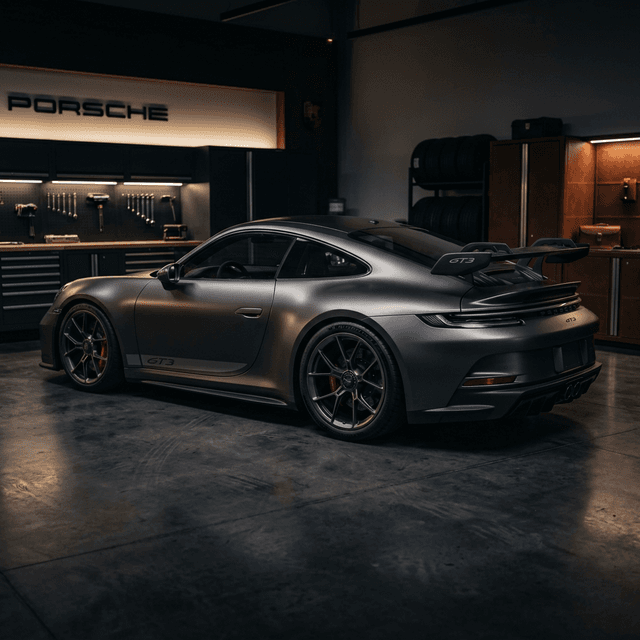
Our recommendation for maximum protection: PPF on high-risk areas (full hood, full bumper, fenders, rocker panels, mirrors) + ceramic on the entire vehicle, including over the PPF. This combination provides unmatched multi-layer defense: PPF absorbs physical impacts while ceramic repels chemical contaminants and simplifies maintenance.
Limited budget? Prioritize PPF on the full hood and front bumper — these areas receive 80% of road impacts. Then add ceramic to the rest of the vehicle for total hydrophobicity. It's the smartest strategy to protect your investment without compromise.